Pebbles In The Pond: News & Musings by Landscape Architect Dick Bell

Just another WordPress.com weblog

Lawrence Halprin, FASLA, Dies at 93 October 27, 2009

Filed under: On Landscape Architecture — kjw27612 @ 11:00 pm

From the ASLA’s “TheDirt” blog: sad news… Lawrence Halprin, FASLA

Lawrence Halprin, FASLA, one of the world’s leading landscape architects, passed away at the age of 93. His six-decade career encompassed such prominent works as the FDR Memorial in Washington, D.C.; Freeway Park in Seattle, Ghirardelli Square, Levi’s Plaza and the United Nation’s Plaza in San Francisco; among many others. In comments to The San Francisco Chronicle, Charles Birmbaum, FASLA, president of the Cultural Landscape Foundation, said: “He was the single most influential landscape architect of the postwar years. He redefined the profession’s role in cities.”


To read the entire tribute, click HERE


NC Landscape Architect To Address Pittsburgh Symposium October 27, 2009

Media contact: Kim Weiss, blueplate pr

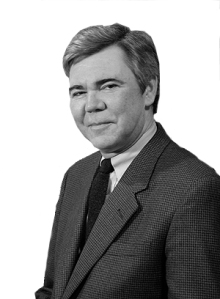
DBell

On a bridge in Pullen Park... (photo by f8 Photo Studios)

October 26, 2009 (ATLANTIC BEACH, NC) – Master landscape architect Richard C. “Dick” Bell of Atlantic Beach, NC, will address a special symposium on the work and influence of pioneering landscape architect John O. Simonds, to be held in the Andy Warhol Museum in Pittsburgh, PA, on November 6.


Bell, a multi-award-winning practitioner whose own work includes landmark projects throughout North Carolina, apprenticed under John Simonds in the 1950s before Bell establishing his first firm in Raleigh, NC.


“Simonds & Simonds Landscape Architects was one of the premier design firms in the nation at that time,” Bell said. “And as the senior man in the office, I was fortunate to get to design some of the projects for John. They were mostly residential designs for architects who practiced the new – at that time — Modern style.”


The syposium, entitled “The Hunter and the Philosopher: John O. Simonds,” will focus on Simonds’ work as an author, environmentalist and landscape architect

It will also emphasize Simonds’ influence on the City of Pittsburgh, the field of landscape architecture, and his pioneering environmental planning efforts. Pittsburgh Parks Conservancy, Garden Design magazine, and the American Society of Landscape Architects are sponsors.


“I learned so much from John that I carried with me throughout my entire career,” said Bell, whose own career spans 50-plus years. “He was tough and he was a perfectionist. I’m honored to be a part of an event that honors John and his work.”


Bell discusses his time at Simonds & Simonds in his upcoming book “The Bridge Builders,” which traces the genesis of Bell’s life’s work. The book is due out in the spring of 2010.


For more information on Richard C. Bell, go to http://www.metronc.com/article/?id=1515.


For more information on the Pittsburgh symposium, go to http://www.tclf.org/events/pioneers/pittsburgh/index.html.


About Dick Bell


Richard C. Bell, a Fellow of both the American Society of Landscape Architects and the American Academy in Rome, was the youngest person ever to receive the Prix de Rome at age 21. Driven by a single, professional mission “to leave a little beauty behind wherever I go,” he earned a national reputation for excellence, and provided Raleigh, NC, with some of its most beloved landmarks, including the N.C. State University “Brickyard,” the serpentine wall at St. Mary’s College, Pullen Park, and the Meredith College lake and amphitheater. He also designed his 11-acre Water Garden complex, one of Raleigh’s first mixed-use developments and an early example of buildings coexisting in harmony with natural resources. Born and raised in Manteo, NC, Bell attended NCSU, where he studied landscape architecture and assisted with the master plan for the university. He and his wife, Mary Jo, lived and worked in Raleigh for 50 years before moving to Atlantic Beach, NC, where he continues his practice today. He was inducted in the Raleigh Hall of Fame in 2008.


New Post at “Goodnight, Raleigh”: NC Legislative Building October 23, 2009

Since I created the landscape architecture for this magnificent structure — including the rooftop gardens — I was especially pleased to see a young writer for a Raleigh blog pay such a tribute to it in an article entitled “An Intersection of Architectural Masters.”

Glad to see the piece is receiving so many positive responses.

NC Legislative Building

NC Legislative Building

(And yes it’s true: Some of the legislators wanted me to plant tobacco in the rooftop gardens!)


“Better, Bolder Buildings for NC” October 11, 2009

Filed under: Architecture — kjw27612 @ 9:03 pm
Tags: ,

pov-welton.ART_G7OQ1BJB.1+legislative.embedded.prod_affiliate.156An excellent architectural writer has entered the North Carolina media — Mike Welton — and we’re very fortunate to have him. I hear he’ll begin contributing a monthly column to Raleigh Metro Magazine starting in November. I’m looking forward to it. He penned an op-ed for the News & Observer that is both full of insight and excellent suggestions. Please take a moment to read it by clicking HERE.

Keep up the good work, Mike!


Thoughts… September 22, 2009

Filed under: On Landscape Architecture — kjw27612 @ 4:22 pm

…We must tread lightly upon the land, enhancing its natural characteristics, protecting its natural vegetation, utilizing its existing trees, and treating all areas left over after construction as open space…   WG4

…Wherever possible, natural systems should be utilized as educational devices in which children can play and come to understand that they are as important to human survival as they are to biological diversity and runoff mitigation…

…Understanding nature creates an appreciation of beauty, which in turn creates an appreciation of art. Think of the Holy Trinity not only as God, Son, and Holy Spirit but also as Nature, Beauty, and Art.

(This photo is from my Water Garden development…several years ago.)


Bell/Glazener Restores Mid-Century Garden at UNC-G September 14, 2009

I thought I’d share some news just released concerning a project my son-in-law did at UNC-Greensboro…

The garden after restoration...

The garden after restoration...

September 14, 2009 (GREENSBORO, NC) – “Attention to the outside environment makes a vast difference in people’s experience of [a] campus,” notes the Society for College and University Planning in an introduction to a webcast the SCUP presented on the need for pleasant outdoor spaces in university settings.

Four years ago, Bell/Glazener Design Group, a Raleigh, NC-based landscape architecture firm, helped the University of North Carolina at Greensboro improve how students, faculty and visitors experience that historic campus by restoring and expanding a once vibrant, ca. 1952 outdoor gathering space back to its original intent.

Since then, the Taylor Garden has become a favorite outdoor space for individual study, outdoor dining, and informal student meetings. Occasionally, academic classes meet there as well.  Today2sm

Charles Bell, Superintendent of Grounds back when UNC-G was called the Women’s College, designed the original garden and pool next to Elliot University Center. It was named in  honor of the Woman’s College Dean of Students, Katherine Taylor, in 1973. A publication of the time described it as ” a large paved patio planted in flowers and evergreens, with a central fountain.”

According to John Pope, an architect with UNC-G’s Facilities Design and Construction office, the Taylor Garden was once used for student gatherings and afternoon teas. But over the years, the patio area deteriorated. The concrete and slate pavers became cracked and damaged, and the pool so often that the gold fish once living there had to be removed. The planting areas also needed redefinition and updating.

“While the University Grounds Department did the best job they could of maintaining the patio area, the obvious solution was to renovate the garden,” Pope said.

Dennis Glazener, ASLA, principal of Bell/Glazener Design Group, maintained the original character of the garden by restoring yet upgrading the original water element and distinctive patio. To bring the pool up to code without the need for a guardrail (the depths was an issue), he built a new shell inside the exiting structure. A contemporary mechanical and UV filtration system allowed aquatic life to return to the pool. For the Garden’s grass and slate patio grid, he added an efficient drip irrigation system for the fescue grass joints.

Where additional paving was needed, Glazener used scored concrete “to differentiate between old and new,” he noted. “This is something the North Carolina Cultural Resources Department’s division of Archives and History prefers so visitors can see where the original design stops and the additions begin.” He also made a point to reuse and restore as much existing slate as possible.

The plant material present when construction began on the garden was relocated to other areas of the campus. For the “new” Taylor Garden, Glazener specified redbud, magnolia, holly, maple and elm trees, and azalea, hawthorn, osmanthus and holly shrubbery. All plant material was obtained locally.

Glazener’s design includes additional pedestrian lighting and a blue light phone for security purposes. The University selected the patio furnishings.

The Taylor Garden restoration coincided with the renovation and expansion of Elliott University Center.

For more information on the project, visit www.bgjdesign.com.

The Taylor Garden in 1952 -- a favorite gathering place for student and faculty events.

The Taylor Garden in 1952 -- a favorite gathering place for student and faculty events.

About Bell/Glazener Design Group:

For over 50 years, Bell/Glazener Design Group has provided design services to commercial, residential, and institutional clients in North Carolina, South Carolina and Virginia. Projects range from residential landscape architecture to extensive regional planning, urban design, campus planning, land use-master planning and sports-recreational planning. For more information visit www.bgjdesign.com or call 919-787-3515.


Landscape Architects Play Central Role in Green Design August 28, 2009

Filed under: On Landscape Architecture, Sustainable Design — kjw27612 @ 5:46 pm

The following article, by this title, first appeared in Engineering News-Record but was reprinted in Architectural Record on August. 6, 2009. I share the link here because I feel it’s important…

http://archrecord.construction.com/news/daily/archives/090806landscapearc-1.asp

ARlogo_415px


I come from a family of bridge builders… August 15, 2009

Filed under: About my upcoming books — kjw27612 @ 6:49 pm
Tags: , ,

I thought I would share with any readers of my blog the Prologue to my upcoming book, The Bridge Builders, book one of a trilogy of books…

Sunrise on Roanoke Island

Sunrise on Roanoke Island

PROLOGUE

The Bridge Builder

An Old man, going a long highway,

Came, at the evening, cold and gray,

To a chasm, vat, and deep, and wide,

Through which was flowing a sullen tide.

The old man crossed in the twilight dim;

The sullen stream had no fears for him;

But he turned, when safe on the other side,

And built a bridge to span the tide.

“Old man,” said a fellow pilgrim, near,

“You are wasting strength with building here;

Your journey will end with the ending day;

You never again must pass this way;

You have crossed the chasm, deep and wide

Why build you the bridge at the eventide?”

The builder lifted his old gray head:

“Good friend, in the path I have come,” he said,

“There followeth after me today

A youth, whose feet must pass this way.

This chasm, that has been naught to me,

To that fair-haired youth may a pitfall be.

He, too, must cross in the twilight dim;

Good friend, I am building the bridge for him.”

I come from a family of bridge builders who spent their lives trying to create a better world in which to live, work, and play — not only for themselves, but also for those around them. Men and women, black and white, lawyers, ministers, professors, artists, farmers, politicians, and school teachers – scores of folks from all walks of lives were touched by these stalwart bridge-builders, who saw education as a life-long pursuit and shared their knowledge with those around them. Their classrooms were not only books of all sorts on all variety of subjects, but their own homes and gardens – from the rolling, stonewalled estate of a English duke to the simple cottages and flat, sandy soils of coastal North Carolina. Indeed, much of what they learned had some basis in the land – in planting and growing things from the soil.

(more…)


From the News & Observer, 11/4/2007: “Landscape Architect Makes Gift To NCSU” August 2, 2009

Filed under: About DIck Bell — kjw27612 @ 8:08 pm
Tags: , , ,
 

The Game’s Afoot! July 23, 2009

As I was growing up in Manteo and Elizabeth City, North Carolina, during the Great Depression of the ‘30s, I fell I love with the adventures of Tom Sawyer and Huckleberry Finn. I loved to lose myself in their world as they white-washed fences, ran errands for their parents, slipped away to raft and fish the Mississippi River,

My buddy Billy Hackett (left) and me at play on Roanoke Island.

My buddy Billy Hackett (left) and me at play on Roanoke Island.

studied the currents and dangers of the shoals, and came to know intimately the land forms they traversed. Every day was a learning experience for them. But despite the fun and adventures they had, the ultimate goal was survival.

Actually, life outside of that fascinating literary world was much the same for me at the time. Survival was the ultimate goal – with a little fun and adventure mixed in to keep it interesting! But every single day my parents had to struggle to provide the basic necessities of food, shelter and clothing for our little family. Those things most of us take for granted today were hard-won goals back then.

Mom and Dad in Manteo

Mom and Dad in Manteo

In his own right, my father was a pioneer. A self-taught man, he designed and built the first replica of Fort Raleigh in Manteo and, soon thereafter, “The Lost Colony” amphitheater. (Many other outdoor drama amphitheaters would follow.) A British immigrant, he first had to learn the nature of the new place he called home and how he could care for it and manipulate it to make a life for himself and his family. Meanwhile, my mother was blazing her own trail as she raised her children and created the first plant nursery on Roanoke Island. Creativity and determination propelled my parents as the dreamed, scheme and struggled against difficult circumstances and odds.

(more…)